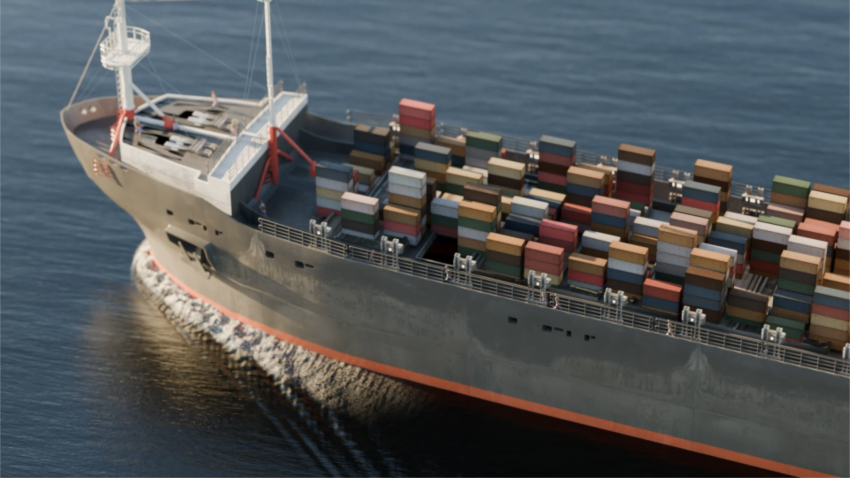
Maritime Connected
At Distant Future Animation Studio, for Lloyd’s Register Foundation
I was part of a three-person team at Distant Future on this animated film for Lloyd’s Register Foundation, made to promote the Maritime Connected initiative and created in approximately two months. The film won Animation, VFX and CGI at the RTS Yorkshire Awards 2026 and was shortlisted for Excellence in Creative Craft at the Prolific North Creative Awards 2026.
My role covered a large share of modelling and asset creation, along with shading, lighting and shot composition. Before the final design was locked in, I produced the concept designs and renders that were sent to the client to show what kind of look we were aiming for. Creating around 5 different versions of a shot in a short space of time so the client could choose the direction that fit them best.
Most of the main animation and the original creative direction came from the rest of the team at Distant Future. Read the full write-up on their website: https://www.distantfuture.co.uk/how-we-helped-lloyds-register-foundation-tell-a-global-story-in-under-90-seconds/
Final Product
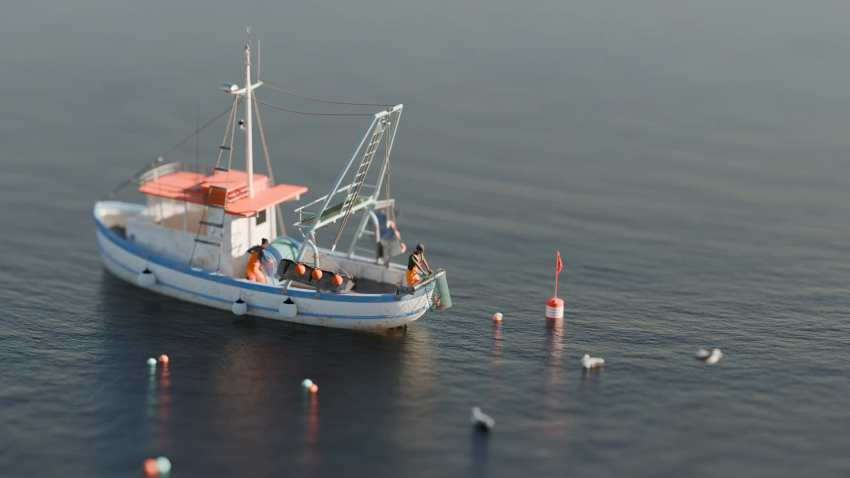
My main job on the look of the film was shading, texturing and creating procedural shaders for various things in the animation, including the boat and everything around it.
The biggest challenge was making everything feel small despite being at real scale; this is where Blender comes in really useful, being able to accurately recreate a tilt shift setup in a 3D environment and judge the result straight in the viewport.
I drew on my experience making miniature animations before this and the lessons I learned from them. Shallow depth of field does a lot of the work; in this shot, having buoys close to the edge of the frame tells the viewer they are looking at a small model from how out of focus they are.
I also built a water shader that behaves the way water does when it’s filmed on a tilt shift setup, with soft ripples and reflections that read like a tabletop model.
Miniature Style Shading
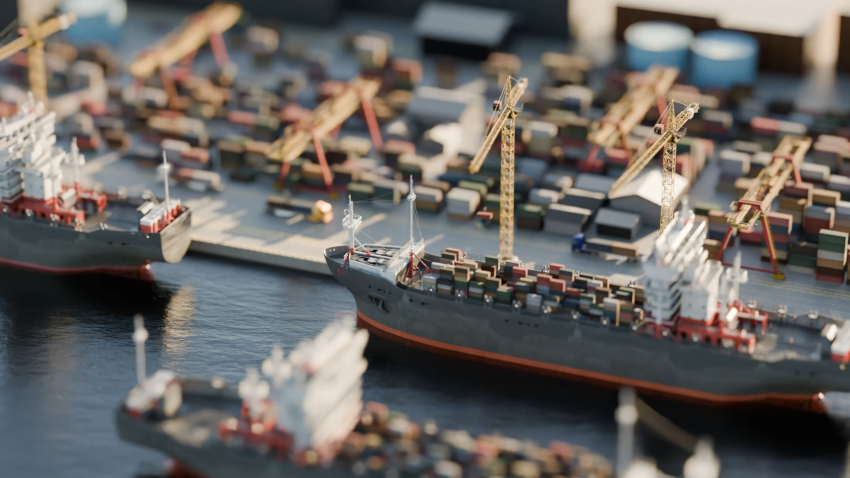
For the dock shots, my job was to make it feel like actual footage of a busy location. The main way to do this, other than creating noise to look visually busy, is to add a lot of moving actors. Cranes, vehicles, and Trucks moving around the scene to make it feel like hundreds of people working around a real set.
To make the cranes quick to animate, I rigged them so that the crane hook could be keyframed and the rest of the crane would solve itself.
I also built a procedural setup using Geometry Nodes that scatters shipping containers across the quay and onto the ships, random enough to look natural but still making sense next to what the cranes are doing. This reduced the time to create the scene by a significant amount.
Creating Busyness


Before the design was finalised, I produced the concept renders that were sent to the client, each with different interpretations of the brief. We internally came up with various ideas, and my job was to make those visual.
Working in Blender made that quick, because the lighting, camera and tilt shift setup were already in the scene, so I could change the style without starting over.